Phlebotomist Course: Eligibility, Job & Salary after 12th
By Vibha Taneja on 7 Dec 2023
8 mins read
Table Of Content
Imagine you're at a doctor's clinic, feeling a bit nervous about the blood test you're about to get. There's also a skilled healthcare professional named Ritika at your side. She greets you with a warm smile, makes sure you are comfortable, and before you know it, your sample has been collected safely. Ritika’s expertise not only puts you at ease during the whole procedure but also ensures the accuracy of your test results, which play an essential role in diagnosis and treatment. Ever wondered who these healthcare professionals are? They're phlebotomists!
In this blog, we'll delve into what it means to be a phlebotomist and what makes it a great career choice in the field of healthcare. Phlebotomy Course Information
Phlebotomy Course Information
Phlebotomy Course Level
Certificate and Diploma
Phlebotomy course duration
6 months to 3 years (Depending on the course level)
Phlebotomy course qualification
Candidates must have passed 10+2 with minimum 50% marks in PCB/PCMB
Phlebotomy course average annual fees
Government institutes - INR 20,000 to 50,000
Private institutes - INR 1 to 1.5 lakhs
Phlebotomist top recruiting fields
Hospitals, clinics, nursing homes, diagnostic laboratories, community health centers, blood donation centers and drives, mobile phlebotomy services, research institutes, academic training institutes, etc.
Have you ever wondered what this fascinating practice, called "phlebotomy" is all about? Phlebotomy is the medical practice of drawing blood from patients for various diagnostic and medical purposes. It's a fundamental aspect of healthcare that aids in the early detection, diagnosis, and treatment of illnesses.
Let’s together go through the world of the skilled professionals who make it happen!
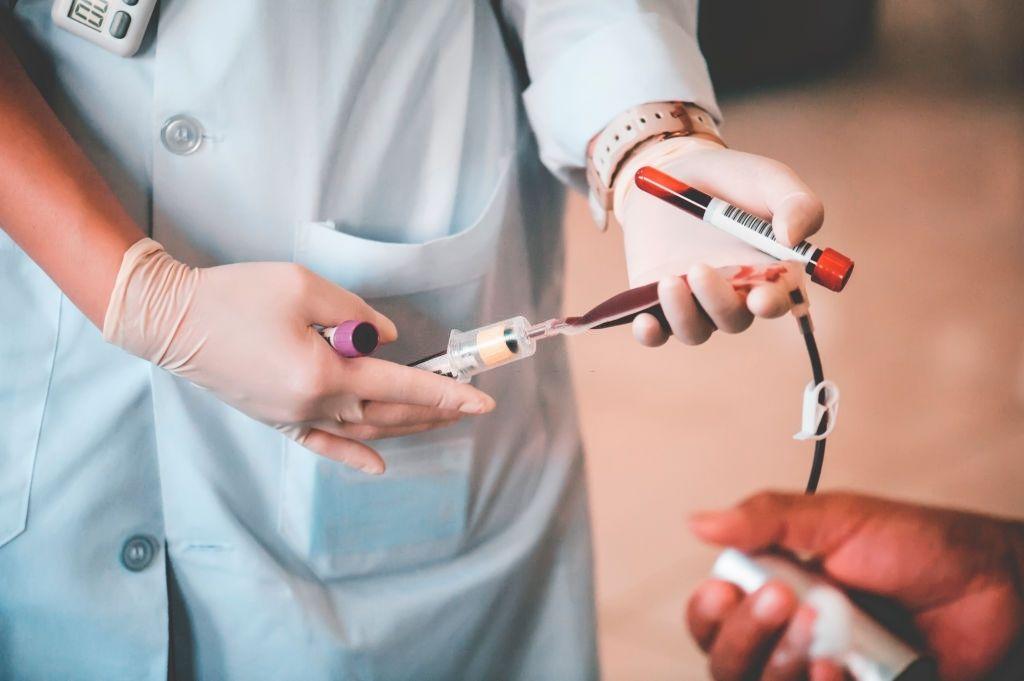
Phlebotomists are skilled professionals who are responsible for the safe and efficient collection of blood samples, ensuring the accuracy and integrity of each specimen. These samples are then used for laboratory testing, research, and monitoring patients' health.
Phlebotomists also assist various healthcare professionals, technologists, doctors, and nurses for various medical procedures.
What Does the Phlebotomist Do?
Phlebotomists play an important role in our lives by performing a range of responsibilities. Let’s take a glimpse into the multifaceted role of phlebotomists.
Phlebotomists are responsible for:
Correctly identifying patients and verifying their identities
Educating patients about phlebotomy procedures and ensuring their comfort
Safely and hygienically collecting blood samples
Labeling and properly storing collected specimens
Safely transporting blood samples to the laboratory
Maintaining accurate records of sample collection
Collaborating with laboratory staff to process and analyze samples
Responsible for maintaining phlebotomy equipment
These tasks require a delicate balance of technical skills, communication skills, compassion, and precision.
Curious about the path to becoming a proficient phlebotomist in India? Let’s explore the essential steps towards this fulfilling profession.
The basic requirement to become a phlebotomist in India is pursuing a course in Medical Laboratory Technology. One of India’s leading institutes that offers MLT courses is Virohan institute which has campuses PAN India.
To fulfill the eligibility requirements for applying to an MLT course, the aspiring phlebotomists must:
Have completed class 12th from a recognized board with a minimum of 50% aggregate
Have Science background . However some institutions like VIROHAN, offer these MLT courses to students from all streams, including science, commerce, and arts. So students from any stream can pursue these courses
To work as a phlebotomist, pursuing a medical lab technician course program helps you forge ahead in your career and become a valuable part of the healthcare sector. Phlebotomists are crucial players in helping patients receive an accurate and timely diagnosis. Now it’s time for us to explore different MLT courses that can be pursued to become a phlebotomist!
Certification in Medical Laboratory Technology (MLT):
This course equips students with the fundamental skills needed to be a proficient phlebotomist. This is a short-term specialization course.
Duration - 3 months to 6 months depending on the institute
Note - Different institutions may have different duration for phlebotomist training, so please make sure you refer to their details at the time of application.
But what if you want to acquire more knowledge and are eager to advance your career as phlebotomists further? Well, there's a whole world of options waiting for you.
Diploma in Medical Laboratory Technology (DMLT):
With a DMLT, you'll deepen your understanding of laboratory techniques and patient care, becoming an even more valuable asset to the healthcare team.
Duration: 1-2 years (May include internship as per specific university guidelines)
Note - Different institutions may have different duration for phlebotomist training, so please make sure you refer to their details at the time of application.
Aspiring phlebotomists have the option to pursue advanced courses either immediately after completing their 12th grade or following the completion of a diploma or certification program in Medical Laboratory Technology (MLT).
Advanced Diploma in Medical Laboratory Technology (ADMLT):
The students can take their expertise to the next level with an ADMLT course. They gain advanced knowledge and skills, placing themselves for higher-level positions in the field.
Duration: 1.5-2 years (May include internship as per specific university guidelines)
Note - Different institutions may have different duration for phlebotomist training, so please make sure you refer to their details at the time of application.
Bachelor of Medical Laboratory Technology (BMLT):
Dreaming big? A BMLT degree opens up a world of possibilities. Students indulge into in-depth study, research, and advanced laboratory techniques, to take up some exceptional responsibilities as phlebotomists within the healthcare sector.
Duration: 3 Year (May include internship as per specific university guidelines)
Courses Offered at Virohan to Become a Phlebotomist
To become a phlebotomist, programs like DMLT (Diploma in Medical Laboratory Technology), ADMLT (Advanced Diploma in Medical Laboratory Technology), or BMLT (Bachelor of Medical Laboratory Technology) are offered at Virohan Institute. At Virohan it isn't just about earning a certificate or completing a course! It's about gaining practical skills and knowledge that are directly applicable in the healthcare industry.
Virohan institute of health and management sciences offers other paramedical programs also, like Operation Theatre Technology and Hospital Administration. These healthcare courses are taught to you in such a way that you get the hands-on experience, practical knowledge, and insight to deal with patients in real life right after finishing the course.
Prior to your admission, you can go for career counselling at Virohan institute. This expert counselling helps you understand what is best for you, and offers you a deep understanding of the scope of the best job-oriented healthcare programs before you make a decision.
The phlebotomy course fee varies in different institutions depending on the length of the program, with aspiring phlebotomists seeking affordable and comprehensive education options.
Certificate Course in Medical Laboratory Technology (CMLT)
INR 30,000 to 40,000
Diploma, Advanced diploma & Bachelors in Medical Laboratory Technology (DMLT, ADMLT & BMLT)
Government institutes - Ranges from INR 20,000 to 50,000 per annum
Private institutes - Ranges from INR 1 to 1.5 lakhs per annum
Note - Different institutions may have different fees, so please make sure you refer to their details at the time of application.
Top Institutes and Organizations for Aspiring Phlebotomists
In India, phlebotomy training programs are typically offered by various medical and paramedical institutions, technical schools, and vocational training centers. These programs focus on providing students with the necessary knowledge and skills to become certified phlebotomists. Here are a few institutions in India that offer phlebotomy training:
Government medical and paramedical colleges and institutions -
All India Institute of Medical Sciences, New Delhi
Armed Forces Medical College, Pune
Institute of Medical Sciences Banaras Hindu University, Varanasi
Madras Medical College, Chennai
Jamia Hamdard University, New Delhi
Private paramedical colleges and institutions -
Sri Ramachandra Institute of Higher Education and Research, Chennai
Christian Medical College, Vellore
Virohan Institute
Kasturba Medical College, Manipal
Manipal College of Allied Health Sciences, Manipal
Job Opportunities for a Phlebotomist
As a phlebotomist,, you will get the opportunity to work in various healthcare settings.
Common workplaces for phlebotomists include:
Hospitals
Clinics
Nursing homes
Diagnostic laboratories
Community health centers
Blood donation centers and drives
Mobile phlebotomy services
Research institutes
Academic training institutes
The choice of which healthcare setting a phlebotomist jobs can depend on various factors including individual preferences and career goals.
With experience and additional training, phlebotomists can advance their careers in a variety of ways.
Entry-level Phlebotomists - Collect blood samples from patients for a variety of tests, such as blood counts, biochemistry tests, and infectious disease testing. They are also responsible for preparing blood samples for testing and labeling them accurately.
Experienced Phlebotomists - Phlebotomist jobs offer more advanced positions, such as:
Lead phlebotomist: Supervise other phlebotomists and ensure that blood samples are collected and processed accurately. They may also train new phlebotomists and develop new phlebotomy procedures.
Mobile phlebotomist: Travel to patients' homes or businesses to collect blood samples.
Specialty phlebotomist: Collect blood samples for specific types of tests, such as pediatric blood draws or oncology blood draws.
Phlebotomists typically earn competitive salaries. The phlebotomist salary in India can vary depending on several factors, including the location, level of experience, and the type of healthcare setting they work in. Generally, phlebotomists in India can expect to earn salaries in the range of INR 2,00,000 to INR 4,00,000 per year, but this can vary significantly. As phlebotomists gain more experience and expertise, their earning potential increases.
Your options will multiply once you have taken the initial steps towards getting a certification or a degree. Why not get started today?
It is imperative and natural that you choose the best paramedical institute, such as Virohan institute]for pursuing a career as a phlebotomist, where you acquire all the skills and get the best learning opportunities.
Explore other paramedical courses at Virohan institute to build a career in the healthcare industry.
It is a procedure in which a needle is used to draw blood from a vein usually for laboratory testing.
What is a phlebotomist?
Phlebotomists are skilled professionals who are responsible for the safe and efficient collection of blood samples, ensuring the accuracy and integrity of each specimen.
Is phlebotomist a doctor?
The phlebotomist is an allied healthcare professional and not a doctor.
How much does it cost to become a phlebotomist?
The phlebotomy technician course fee varies in different institutions depending on the length of the program.
Certificate Course in Medical Laboratory Technology (CMLT)
INR 30,000 to 40,000
Diploma, Advanced diploma & Bachelors in Medical Laboratory Technology (DMLT, ADMLT & BMLT)
Government institutes - Ranges from INR 20,000 to 50,000 per annum
Private institutes - Ranges from INR 1 to 1.5 lakhs per annum
How to get a phlebotomist certification?
To get a phlebotomist certification aspirants should have cleared class 12 from science stream. Once the eligibility criteria is fulfilled the aspirant can choose any certificate or degree program (such as CMLT, DMLT, ADMLT or BMLT) from any recognised institute.
Is NEET required to become a phlebotomist?
No, the NEET exam is not required for becoming a phlebotomist.
Explore the Virohan App
Virohan enables universities and colleges to deliver world-class healthcare education with job-ready skills. We are an industry partner to Higher Education Institutions (HEls), that offer Healthcare and Management programs such as Physiotherapy, Optometry, MLS, MRIT, AOTT, and more. These programs are awarded as undergraduate and postgraduate degrees by our partner universities, preparing students for meaningful careers.
Corporate Information
Get Inspired:
Virohan enables universities and colleges to deliver world-class healthcare education with job-ready skills. We are an industry partner to Higher Education Institutions (HEls), that offer Healthcare and Management programs such as Physiotherapy, Optometry, MLS, MRIT, AOTT, and more. These programs are awarded as undergraduate and postgraduate degrees by our partner universities, preparing students for meaningful careers.