A New System Taking Shape
Over the last few months, allied and healthcare education in India has
undergone a fundamental shift. National frameworks have brought clarity to
professions, curricula, and standards. The
next phase of this evolution is now underway, transitioning
into how systems can be
governed locally and policies implemented regionally.
This is where
State Allied & Healthcare Councils (SAHCs)
come in.
Mandated under the NCAHP Act, these councils will ensure allied health is
regularised and operates at the state level,
closer to institutions, students, and healthcare delivery
realities.
What Will State Allied & Healthcare Councils Do
SAHCs are envisioned as the primary state-level bodies responsible for
operationalising allied and healthcare regulation.
Under the NCAHP Act, these councils are empowered to:
-
Register and manage allied and healthcare professionals
- Oversee compliance
- Coordinate with the NCAHP
In practical terms, once constituted, an SAHC becomes the
local regulatory body for allied health, similar to how
medical or nursing councils function within their ecosystems.
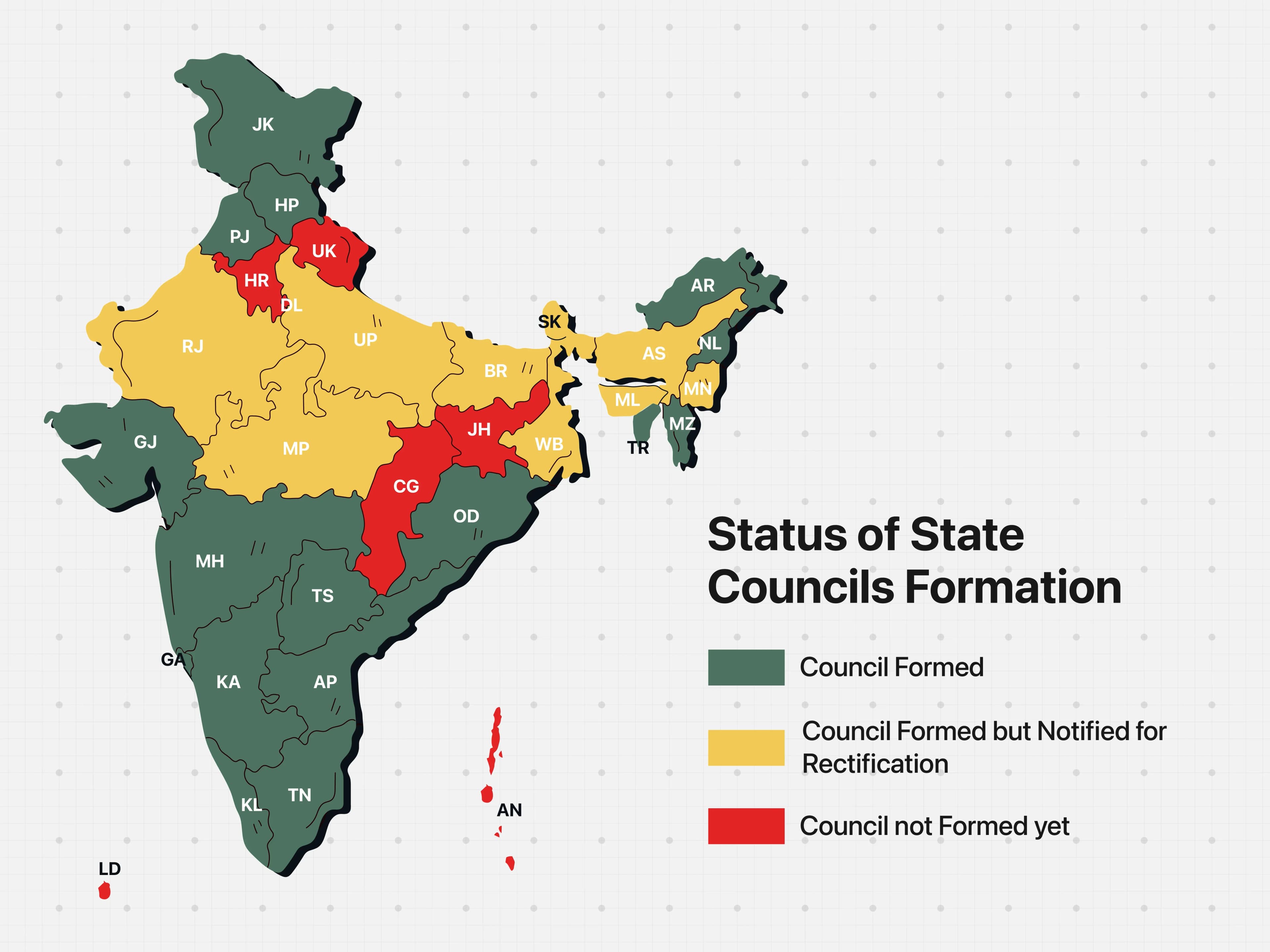
Where SAHCs Have Been Constituted (So Far)
The NCAHP Act requires each
state and union territory to constitute a SAHC.
While progress has been visible, implementation has varied across the country.
Why This Matters for Universities & Colleges
As SAHCs become active, they will directly impact how institutions operate.
Key implications include:
-
Graduate registration: State Councils will act as the
primary registration bodies for allied health professionals
-
Program compliance: Institutions will need to align more
closely with state-level oversight alongside national curricula
-
Quality monitoring: Reporting, audits, and compliance are
likely to become more local and structured
-
Regulatory coordination: Academic leaders and Boards of
Studies will increasingly engage with state councils on implementation
issues
Institutions that understand and engage with their respective SAHCs early are
better positioned to ensure smoother student transitions, clearer compliance
pathways, and fewer operational bottlenecks as regulations take full effect.
The Virohan Perspective
While the NCAHP timelines have seen extensions and state-level progress
remains uneven, the long-term effectiveness of allied healthcare reform
depends on these councils becoming fully operational.
We see SAHCs as a
critical bridge between national standards and state-level implementation,
strengthening governance
while accounting for state-specific healthcare needs.
For universities and colleges, these councils offer:
- A platform for dialogue on implementation challenges
-
Greater alignment between training and regional workforce
requirements
-
Faster resolution of academic and regulatory questions