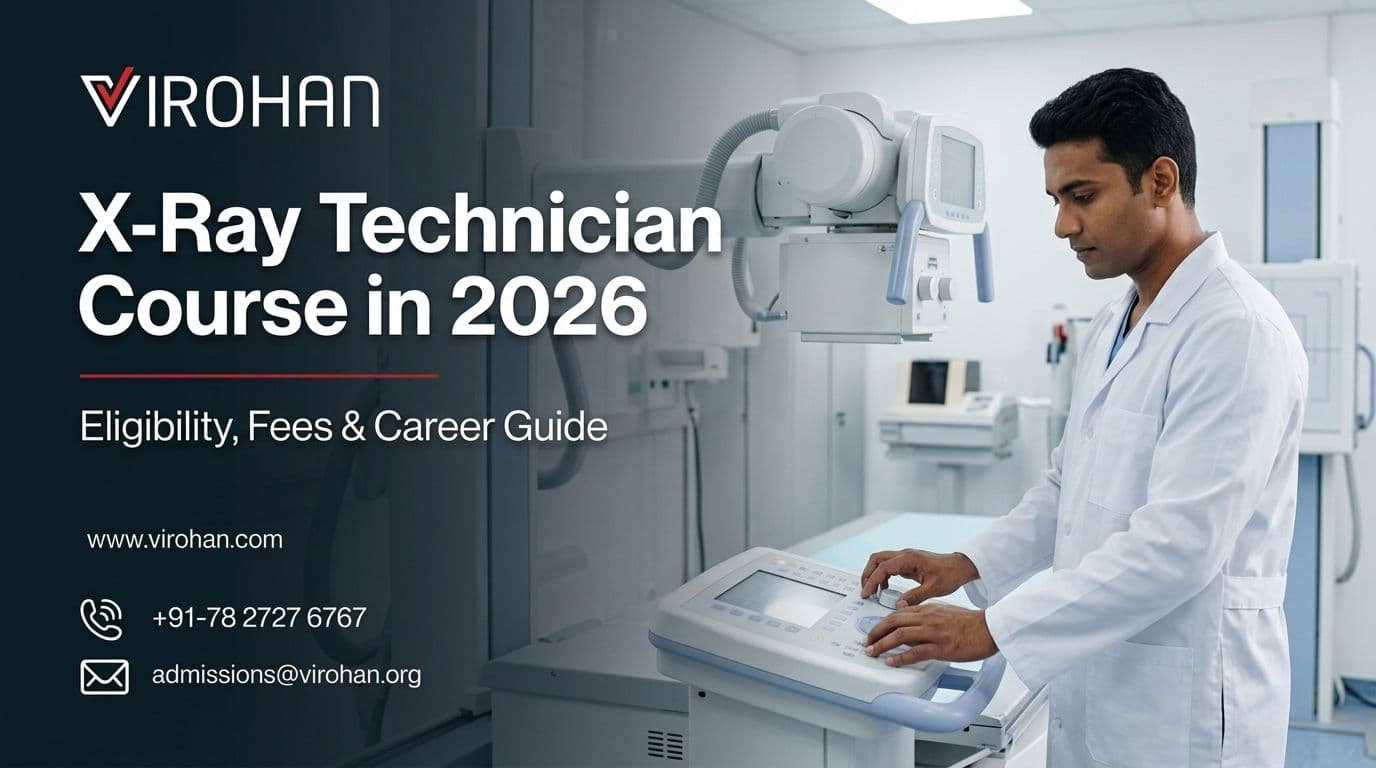
What is an X-Ray Technician Course?
An X-Ray Technician course trains you to operate imaging equipment that helps doctors diagnose injuries and illnesses. These programs, ranging from diploma to bachelor's degrees, focus on radiography, patient positioning, radiation safety, and equipment handling. You'll learn to produce clear diagnostic images while protecting patients from unnecessary radiation exposure.
The field is growing fast. India's teleradiology market is expanding at 23.71% CAGR from 2026-2034, creating demand for skilled technicians who can handle digital imaging systems. With healthcare facilities opening across tier-2 and tier-3 cities, trained radiographers find opportunities in hospitals, diagnostic centers, and specialty clinics.
Most programs last 1-2 years for diplomas or 4 years for bachelor's degrees. During training, you'll spend significant time in labs and clinical settings, practicing on actual equipment. This hands-on approach prepares you for real-world diagnostic work from day one.
Eligibility Criteria
Entry requirements are straightforward. You need 10+2 with Physics, Chemistry, and Biology at 45-50% marks. Some programs accept Mathematics instead of Biology. Age limits typically range from 17 to 35 years, though this varies by institution.
Here's what you don't need: NEET scores. Unlike medical school, most X-Ray Technician programs admit students through direct application or university-specific entrance exams. This makes healthcare careers accessible to students who didn't pursue the NEET path. If you're exploring all options, see our guide to paramedical courses after 12th.
Some institutions like GE HealthCare offer flexibility, accepting 12th pass from any stream for their technical courses. The minimum age requirement is 18 years for these programs. Government colleges often have stricter merit-based selection, while private institutions may conduct interviews or aptitude tests.
Course Fees and Duration
Diploma programs cost ?50,000 to ?2 lakhs total, depending on whether you choose government or private institutions. Government institutions charge less but have limited seats.
Bachelor's programs (BMRIT — Bachelor of Medical Radiology and Imaging Technology) typically run for four years. These degrees open doors to advanced roles and specializations. For a deeper look at radiology career paths, see our complete radiology course guide. Partner universities working with Virohan offer BMRIT (Bachelor of Medical Radiology and Imaging Technology) — a 4-year job-focused program at ?8.6 lakhs.
Short-term certifications exist too. GE HealthCare's program runs 11 months: four months of classroom instruction plus seven months of paid internship. This fast-track option costs less upfront and gets you earning sooner.
Government colleges offer the best value if you can secure admission through merit. Private institutions provide more flexibility in intake and often have better industry connections for internships.
Curriculum and Key Skills
You'll study anatomy to understand what you're imaging. Radiation physics teaches you how X-rays work and interact with tissue. Imaging techniques cover positioning patients correctly and selecting proper exposure settings. Safety protocols are drilled into every lesson, protecting yourself, patients, and colleagues from radiation hazards. The Atomic Energy Regulatory Board (AERB) sets radiation safety standards that every radiographer must follow.
Practical training dominates the schedule. You'll spend hours in labs learning equipment operation, developing films (in traditional settings), and working with digital radiography systems. Clinical internships place you in real diagnostic centers where you handle actual patient cases under supervision.
Universities with Virohan as the education-to-industry partner emphasize digital radiography and modern imaging software. You'll learn PACS (Picture Archiving and Communication Systems) and RIS (Radiology Information Systems), the digital tools most hospitals use today.
Soft skills matter too. Patient communication, ethics, and teamwork are woven into the curriculum. You'll learn to calm anxious patients, explain procedures clearly, and work efficiently with radiologists and other medical staff.
Top Programs and Institutions
AIIMS, CMC Vellore, and Manipal University run prestigious programs with excellent placement records. Admission is highly competitive. These institutions offer cutting-edge equipment and exposure to advanced imaging techniques.
For accessible options, consider universities partnering with Virohan for industry-aligned curriculum and internship pathways. These programs balance academic rigor with practical skills employers actually need. Partner universities are spread across major cities, making quality education available regionally.
Government medical colleges in each state offer diploma programs at subsidized fees. Check your state's health department website for application details. Private institutions with strong infrastructure and industry connections also offer quality programs across major cities.
Some programs now offer hybrid learning: online theory classes with in-person lab sessions. This flexibility helps working students or those in remote areas access quality training.
Career Prospects and Salary
Entry-level radiographers earn ?3 to 6 lakhs annually. Experienced professionals can reach ?9 to 15 lakhs. Starting positions for diploma holders typically pay ?90,000 to ?1.5 lakhs per year.
Job demand is strong. India faces a severe radiologist shortage, with just one for every 100,000 people. This gap increases reliance on trained technicians to handle imaging workflows efficiently. Diagnostic centers are opening rapidly in smaller cities, creating opportunities beyond metro hospitals.
Career paths include:
- Radiographer in hospitals or clinics
- MRI or CT scan technician (with additional certification)
- Quality control specialist in imaging departments
- Equipment sales or technical support for medical device companies
- Teaching positions in paramedical colleges
Students interested in related diagnostic roles can explore the medical lab technician course or the best lab technician courses in India. For surgical support careers, the operation theatre technician course is another allied healthcare pathway. Those exploring broader healthcare options may find our guides on physiotherapy, hospital management, and top healthcare degrees for 2026 helpful.
Specializing in advanced imaging (MRI, CT, mammography) significantly boosts earning potential. For salary comparisons across allied health fields, see paramedical courses with high salary. These roles require additional training but offer ?8 to 12 lakhs annually. Some technicians move into radiology administration or become imaging department supervisors.
Virohan supports students by giving them access to 2000+ top healthcare brands for internship and job opportunities. Students at partner universities benefit from this industry network, with many transitioning from internships to full-time roles.
How to Get Started with Virohan
Begin with a career assessment. Visit the Virohan website to explore healthcare career options and understand which specialisation fits your interests. Virohan's counselling team helps you choose the right university and program based on your academic background, location preferences, and career goals.
Next, choose a partner university program. Virohan works with universities that offer UGC-approved degrees in medical radiology and imaging technology. These programs combine academic coursework with industry-aligned curriculum designed for job readiness.
Apply to the university of your choice. The application process is straightforward: submit your 12th-grade marksheet, identity proof, and any entrance exam scores if required. Talk to Virohan's expert counsellors for guidance on documentation and university-specific requirements.
Once enrolled at a partner university, you'll access practical training facilities, clinical internships, and placement opportunities. Through Virohan's network of 2000+ healthcare industry partners, students gain access to internship and job opportunities across India.
Conclusion
Pursuing an X-Ray Technician course through universities with Virohan as the education-to-industry partner opens doors to stable healthcare careers in 2026. With clear eligibility requirements, structured fee options, and strong job demand driven by India's healthcare expansion, this field offers genuine opportunities for 12th-pass students seeking meaningful work.
The combination of hands-on training, industry partnerships, and growing diagnostic needs creates a favorable environment for new radiographers. Whether you choose a diploma for quick entry or a bachelor's degree for advanced roles, the path to becoming an X-Ray Technician is accessible and rewarding.
Disclaimer: This article provides general information about X-Ray Technician courses in India. For BMRIT programs at partner universities with Virohan as education-to-industry partner, talk to our expert counsellors. Salary figures, fee estimates, and career outcomes mentioned are approximate and may vary based on institution, location, and individual performance. Verify specific details with the respective institution or regulatory body.