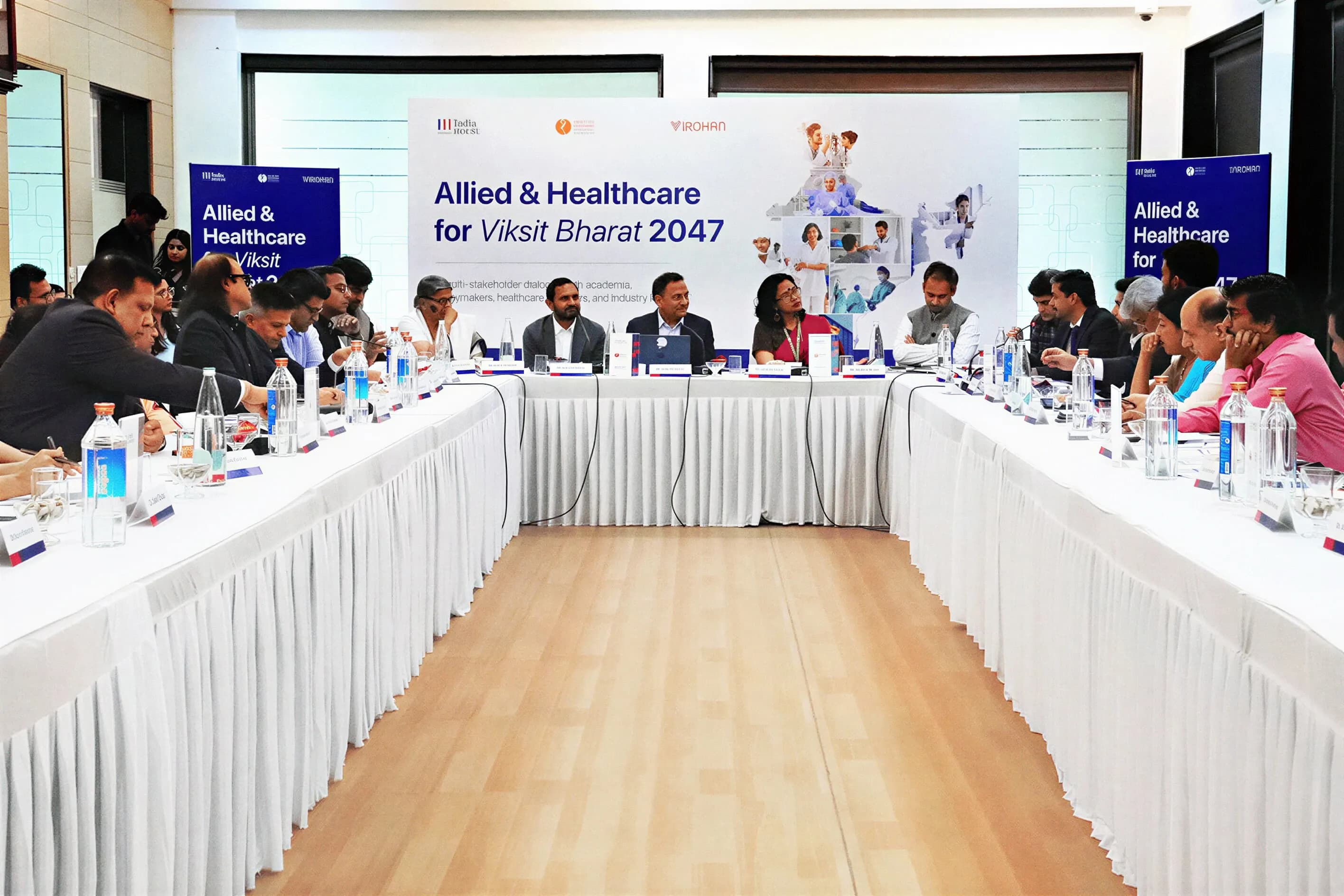
In collaboration with India House and Pahle India Foundation on 13th March, 2026 at the Constitution Club of India, New Delhi.
60+ Industry Leaders join Virohan’s Multi-Stakeholder Dialogue
India’s healthcare ecosystem is expanding rapidly, yet the allied and healthcare workforce, nearly 60% of the system – remains under-recognised.
Against this backdrop, Virohan convened a closed-door multi-stakeholder roundtable on “Allied & Healthcare for Viksit Bharat 2047” on March 13, 2026, at the Constitution Club of India, New Delhi, in collaboration with India House and Pahlé India Foundation.
The roundtable brought together over 60+ leaders from across government, healthcare providers, academia, industry bodies, and civil society.
- Government & Regulatory Institutions
-
Academic Institutions
Representatives from AIIMS Delhi, Symbiosis University, GD Goenka University, GGS Indraprastha University, BBD University, CMR University, Bennett University, Starex University
-
Healthcare Providers
Representatives from Manipal Hospitals, Metropolis Healthcare, Bloom IVF, Oncquest Laboratories, Mahajan Imaging & Labs
-
Social Sector, Think Tanks & Global Health Experts
Dr. Kshama Metre (Padma Shri awardee), Rajendra Gupta (Former Member, World Health Organization), Dr. Ananth Pandhare (Indian Red Cross Society)
Key Insights from the Roundtable
The conversation focused on what it will take to build a workforce that can truly support India’s healthcare ambitions, addressing:
-
Workforce Capacity Gap
India faces a shortage of 6 million allied and healthcare professionals (AHPs). As healthcare capacity demand grows, the need to focus on education and skill training at scale has never been more critical.
-
Strengthening Regulatory Implementation
With the NCAHP Act, 2021 and recent budgetary allocations for workforce development, the foundation for reform is in place. The focus now is on effective implementation.
-
Improving Institutional Readiness
Universities and industry training partners will play a defining role in shaping the next generation of allied and healthcare professionals. However, challenges around regulatory alignment, clinical training infrastructure, and clarity in pathways continue to impact on-ground execution.
As India moves towards Viksit Bharat 2047, building a truly patient-centric healthcare system will depend on strengthening the allied and healthcare workforce. As key touchpoints in care delivery, they enable more responsive, coordinated, and personalised care, ultimately improving patient outcomes.
Coming Up Next
This dialogue is part of a larger effort to bring together diverse stakeholders and build a shared roadmap for the allied and healthcare sector.
Virohan is in the works of developing a comprehensive report titled “Allied & Healthcare for Viksit Bharat 2047”, scheduled for release in June 2026. The report will capture insights from across the ecosystem and outline practical pathways for strengthening workforce development and training systems.