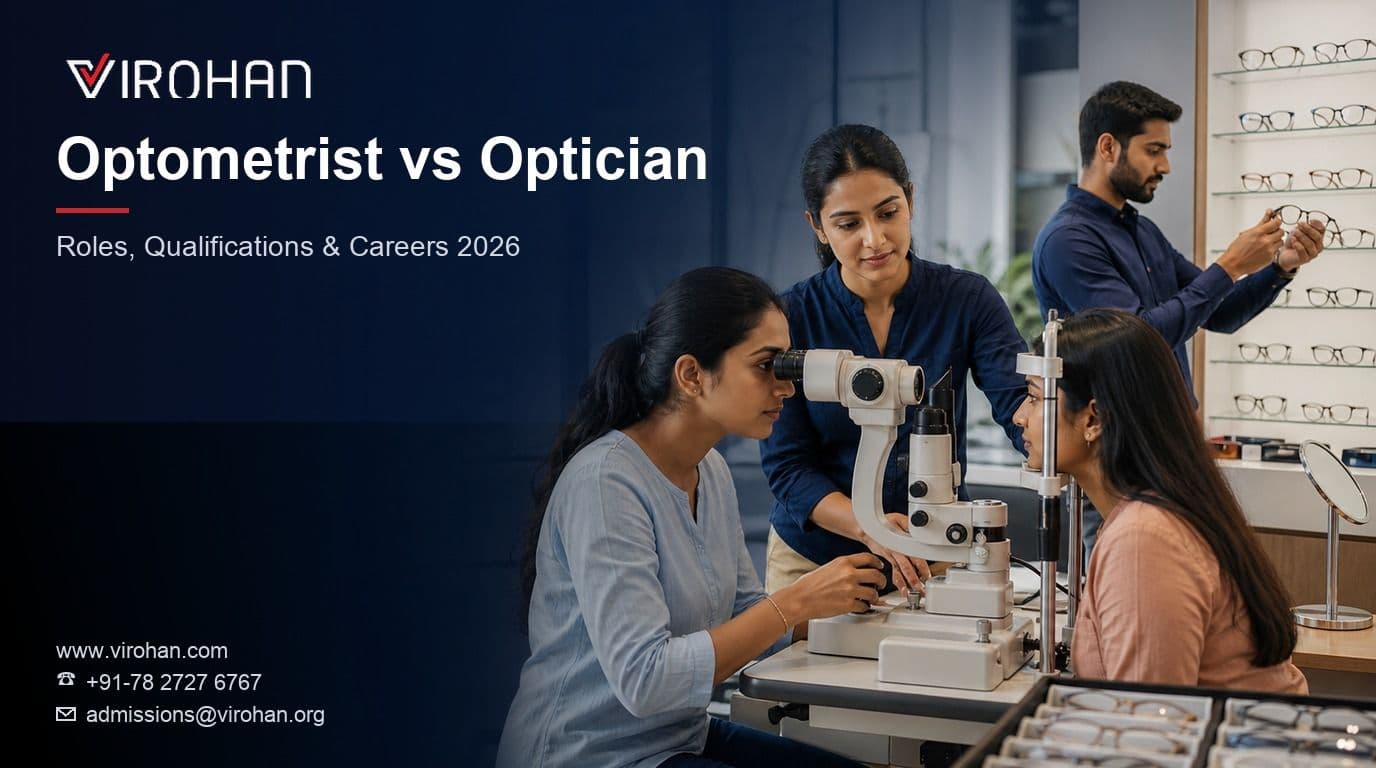
Optometrist vs Optician: Difference, Roles, Qualifications and Careers in India 2026
An optometrist is a primary eye-care clinician who examines eyes, diagnoses refractive errors and common conditions, and manages vision care. An optician interprets prescriptions, fits frames and lenses, and supports dispensing. In India, optometry follows the NCAHP-regulated B.Optom pathway; opticianry centres on shorter dispensing training.
If you are a 12th-pass student weighing a deliberate first-choice career in eye care, the labels can blur. Both roles sit in the same clinic or optical store, yet the training, legal scope, and day-to-day work differ. This guide separates the two pathways , so you can match your interests to the right qualification, workplace, and growth route before you apply.
What Is an Optometrist?
An optometrist is a primary eye-care provider who examines the eyes, diagnoses refractive errors and many common vision conditions, and prescribes corrective lenses or vision therapy. The role is clinical: you assess how well a patient sees, identify problems that need management or referral, and build long-term care plans rather than only selling eyewear.
In practice, optometrists run comprehensive eye exams, measure visual acuity and refraction, and screen for conditions such as glaucoma or diabetic retinopathy. When a case needs medical or surgical care, they refer the patient to an ophthalmologist or another specialist. They may also fit contact lenses, guide binocular vision therapy, and counsel patients on eye health and lifestyle factors that affect sight.
Work settings span hospital eye departments, multi-speciality clinics, optical retail chains with clinical rooms, community vision camps, and independent practice across India. NCAHP’s curriculum index lists Optometry with a notice dated 24 April 2025. The competency-based Optometry curriculum sets out the training blueprint so programs stay evidence-based and consistent nationwide. That standard matters if you want a recognised degree pathway and a clear professional identity in India’s regulated system.
What Is an Optician?
An optician is a skilled dispensing specialist who turns a written prescription into comfortable, accurate eyewear. The focus is technical and customer-facing: reading the prescription, helping the wearer choose frames and lens types, taking facial measurements, and fitting glasses so vision correction works in daily life.
Typical tasks include adjusting nose pads and temples, checking lens centration, repairing or realigning frames, and explaining coatings, tints, progressive designs, or contact-lens handling when that sits within local dispensing practice. Opticians often work on the shop floor of optical retail, in hospital optical counters, or in manufacturing and lab-linked dispensing centres.
What an optician does not do is diagnose eye disease, write a new spectacle prescription, or prescribe medicines. Clinical decisions stay with the optometrist or ophthalmologist. The two roles still depend on each other: a strong prescription only helps if the final pair of glasses or contact lenses is measured, edged, and fitted well.
Key Differences in Roles, Qualifications and Daily Work
The simplest way to separate the careers is this: optometrists diagnose and manage vision problems; opticians translate prescriptions into wearable solutions. Training length and registration also diverge. Optometrists complete a five-year Bachelor of Optometry (B.Optom) pathway (four academic years plus a one-year clinical internship). Opticians typically complete shorter diploma or certificate programs in dispensing optics, often over one to two years.
Dimension | Optometrist | Optician |
|---|
Core focus | Eye examination, diagnosis, vision management | Dispensing, fitting, frame and lens advice |
Typical education | 5-year B.Optom (incl. internship) | Diploma or certificate in dispensing optics |
Prescription | Issues refractive prescriptions within scope | Fulfils an existing prescription |
Disease screening | Screens and co-manages; refers complex cases | Does not diagnose eye disease |
Regulation in India | NCAHP-aligned degree and registration pathway | State optical dispensing norms and employer standards |
Common workplaces | Hospitals, clinics, chains, independent practice | Optical retail, labs, hospital optical counters |
Daily rhythm differs too. An optometrist’s day is appointment-led: history taking, refraction, slit-lamp work, counselling, and documentation. An optician’s day is product and fit-led: frame selection, measurements, adjustments, and after-sales service. In many Indian eye-care teams, the optometrist refers the patient to the optician for final eyewear once the clinical plan is clear. That collaboration is why both roles stay in demand, even though only one path is the full clinical degree.
Education and Training Pathways in India (2026)
For students who want the clinical route, B.Optom is the structured undergraduate degree. At universities partnering with Virohan as their industry partner, B.Optom eligibility is 12th pass with 40% in all subjects individually, and a minimum of 50% in PCB or PCM, as a five-year UG degree pathway. NEET is not required for AY 2026-27. That keeps the door open for science-stream students who want a healthcare degree without the MBBS entrance path.
The curriculum typically covers ocular anatomy and physiology, visual optics, contact lenses, binocular vision, low vision, and public health optometry, followed by a full year of supervised clinical internship. Graduates leave with patient-facing hours, not only classroom theory. NCAHP’s notified Optometry curriculum is the national competency blueprint partner universities align to while they retain academic ownership and award the degree, with industry exposure built into delivery.
Optician training is shorter and skill-focused. Certificate or diploma programs emphasise frame selection, lensometry, facial measurement, edging basics, and customer service. They suit learners who want faster entry into optical retail. They do not replace B.Optom if your goal is independent clinical examination and primary eye-care responsibility under the NCAHP framework.
Applications for programs at universities partnering with Virohan are open year-round. A counsellor conversation helps you confirm stream fit, campus options, and whether the five-year clinical degree or a dispensing route matches your strengths.
Career Opportunities, Salaries and Growth
Optometrists work as primary eye-care practitioners in hospitals, specialty eye institutes, optical chains with clinical services, community programs, and independent clinics. Growth can move toward senior clinical roles, contact-lens or low-vision specialisation, academic teaching, or practice ownership, depending on experience and further study. AmbitionBox’s Optometrist salary data (updated 2025, based on 4.3k reported salaries) shows average pay in India ranging from about ?1.5 lakhs to ?4.8 lakhs per year, with higher bands at some employers and senior roles. Treat these figures as indicative only; city, employer type, and skill set all move offers.
Opticians find steady roles in optical retail, lens manufacturing support, hospital dispensing counters, and multi-brand eyewear stores. Urban and tier-2 markets both need people who can fit accurately and explain products clearly. Progression often runs from floor dispenser to store lead, training roles, or lab coordination.
Demand sits against a large national need for vision services. A peer-reviewed analysis of India’s National Blindness and Visual Impairment Survey data, published in the Indian Journal of Ophthalmology and available on PMC, reported overall visual impairment prevalence of 5.47% in the surveyed population. Employers look for graduates who can work safely inside a regulated team. Nearly a decade in allied and healthcare education has shown consistent interest from hospitals and optical employers in job-ready graduates. Virohan supports students by giving them access to 2,000+ healthcare employer partners across 20+ cities for internship and job opportunities, while universities teach and award the degree and employers run their own hiring.
How to Choose the Right Eye-Care Career Path
Choose optometry (B.Optom) if you enjoy clinical examination, problem-solving with patients, documentation, and longer-term vision management. You should be comfortable with science subjects, careful measurement, and referring when a case sits outside your scope.
Choose opticianry if you prefer hands-on fitting, product knowledge, retail conversation, and turning a prescription into a pair of glasses people will actually wear. You may value a shorter training cycle and a shop-floor or lab environment more than full diagnostic responsibility.
Several allied and healthcare degrees can suit students interested in eye care or adjacent clinical work; interest alone does not lock you into one label. A counsellor conversation usually clarifies which pathway fits your stream, strengths, and preferred workplace. If B.Optom is the right match, applications remain open year-round at universities partnering with Virohan as their industry partner, and you can talk to expert counsellors for campus and eligibility guidance without guessing from incomplete online lists.
NCAHP Regulatory Framework for Optometry
Regulation exists so patients know who is qualified to examine eyes and so graduates share a common competency baseline. The NCAHP Act 2021 created a national structure for standards, education, and professional registration across allied and healthcare professions, including optometry.
For optometry specifically, NCAHP’s curriculum listing shows Optometry with a notice dated 24 April 2025. The Optometry curriculum document standardises what students must learn and practise before they enter the workforce. It supports public vision health by reducing uneven training quality and by giving institutions a clear blueprint for clinical skills, ethics, and referral behaviour.
Students should still verify current nomenclature, eligibility, and registration steps directly with their chosen institution or NCAHP before applying, because circulars and implementation details can update by academic year. Using an NCAHP-aligned B.Optom pathway is the practical way to stay inside the recognised national framework rather than relying on informal short courses for a clinical title.
Conclusion
Optometrists and opticians both protect how India sees, but they are not interchangeable. Optometry is the clinical, degree-led route built around examination, diagnosis, and managed care. Opticianry is the dispensing route built around measurement, fit, and eyewear delivery. If you want a structured undergraduate path in this field, B.Optom at universities partnering with Virohan is a deliberate first-choice allied and healthcare option with clear eligibility for AY 2026-27 and internship-linked learning.
Map your day-to-day interests first, then confirm the qualification that matches that work. When you are ready, talk to our expert counsellors on the Virohan website for personalised guidance on programs, campuses, and next steps.
Salary figures and fee estimates are indicative and may vary based on institution, location, and individual performance. All regulatory information is based on NCAHP communications as of April 2026. Students should verify current details directly with their chosen institution or NCAHP.