Note: This article was also published as a guest article on Careers360. This version is cross-posted on Virohan for students exploring allied and healthcare degree pathways.
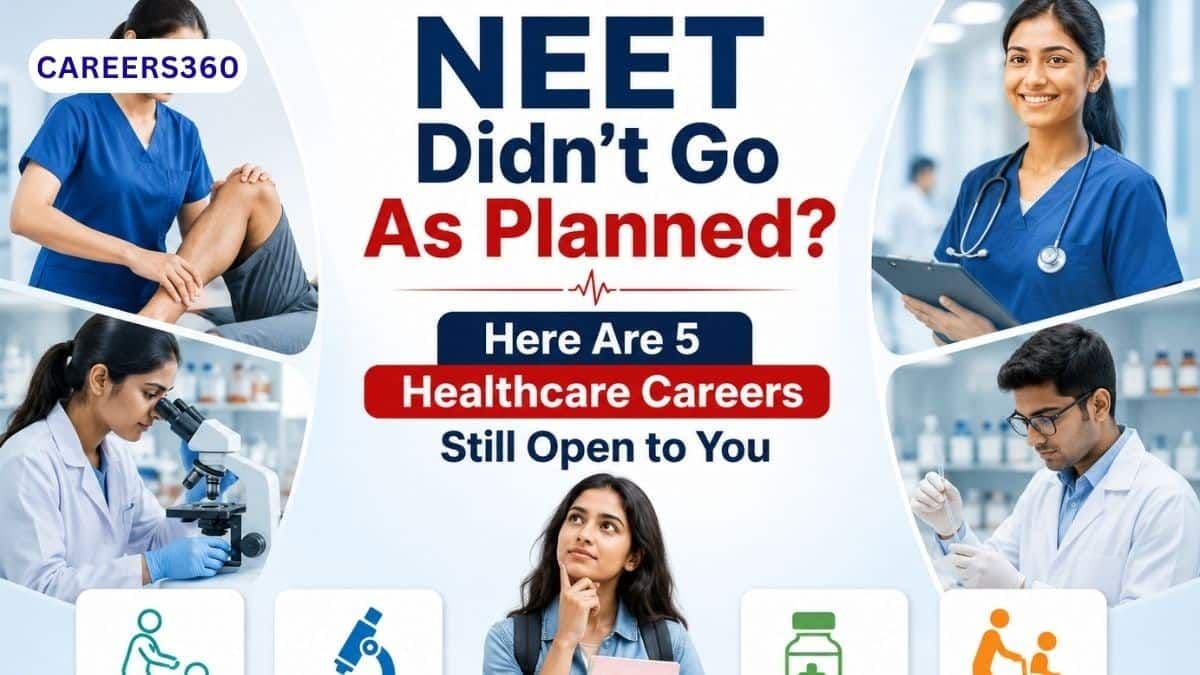
Every year, lakhs of students prepare for NEET with the hope of entering medical or dental careers. But not every student gets the result they expected, and not every healthcare career depends on an MBBS or BDS seat.
India's healthcare system needs a large, skilled allied and healthcare workforce across operation theatres, diagnostic imaging, medical laboratories, physiotherapy, and vision care. These are clinical and technical roles that support doctors, improve patient outcomes, and offer structured career pathways after 12th.
Quick answer: Yes, students can pursue several healthcare degrees without NEET in AY 2026-27. Options include B.AOTT, B.MRIT, B.MLS, BPT, and B.Optom, subject to university-specific eligibility criteria. For BPT, NEET-UG has been deferred to AY 2027-28 as per the NCAHP letter dated 02 March 2026.
Healthcare Careers Without NEET: Quick Comparison
| Career option | NEET status for AY 2026-27 | Career direction |
|---|
| B.AOTT - Bachelor of Anaesthesia & Operation Theatre Technology | Not required | Operation theatre and anaesthesia support |
| B.MRIT - Bachelor of Medical Radiology and Imaging Technology | Not required | Diagnostic imaging and radiology support |
| B.MLS - Bachelor of Medical Laboratory Science | Not required | Laboratory diagnostics and pathology support |
| BPT - Bachelor of Physiotherapy | Not required for AY 2026-27 | Rehabilitation and mobility care |
| B.Optom - Bachelor of Optometry | Not required | Vision care and eye-health screening |
1. B.AOTT - Bachelor of Anaesthesia & Operation Theatre Technology
B.AOTT is designed for students who want to work in surgical and critical-care environments. The program trains students for roles connected with operation theatre management, anaesthesia assistance, patient preparation, equipment handling, and surgical-team support.
Graduates can work as operation theatre technologists, anaesthesia technologists, surgical assistants, OT coordinators, and related clinical support professionals. These roles require precision, calm decision-making, teamwork, and strong understanding of hospital protocols.
As surgical care, emergency care, day-care procedures, and specialized clinics expand, demand for trained B.AOTT graduates is expected to remain strong across hospitals and surgical facilities.
2. B.MRIT - Bachelor of Medical Radiology and Imaging Technology
B.MRIT prepares students to work with diagnostic imaging systems such as X-ray, CT, MRI, ultrasound, fluoroscopy, and related imaging technologies. These professionals support doctors by producing diagnostic-quality images and helping patients through imaging procedures.
Graduates can work as radiology technologists, MRI technologists, CT scan technologists, X-ray technologists, and imaging technologists. The field is important because modern healthcare depends heavily on timely and accurate diagnosis.
Students considering radiology should also understand that radiation-safety practices are regulated separately. In India, the Atomic Energy Regulatory Board is the relevant authority where ionising radiation is involved.
3. B.MLS - Bachelor of Medical Laboratory Science
Medical laboratory science is central to disease detection, diagnosis, monitoring, and treatment planning. B.MLS students learn clinical biochemistry, microbiology, pathology, haematology, molecular diagnostics, quality control, and laboratory operations.
Graduates can work in hospitals, diagnostic laboratories, blood banks, research labs, public health labs, and specialized diagnostic centres. The role has evolved from back-end support to a core clinical function because doctors rely heavily on laboratory results for medical decisions.
B.MLS also offers routes into specialization through postgraduate study in areas such as molecular diagnostics, microbiology, haematology, transfusion medicine, and lab management.
4. BPT - Bachelor of Physiotherapy
BPT is for students interested in recovery, rehabilitation, mobility, and pain management. Physiotherapists help patients recover from injuries, surgeries, neurological conditions, sports injuries, lifestyle-related disorders, and age-related mobility challenges.
For AY 2026-27, NEET-UG is not mandatory for BPT because the NCAHP has deferred the NEET requirement to AY 2027-28. Students should still verify eligibility and admission rules with the university they apply to.
Career paths include physiotherapist, rehabilitation specialist, sports therapist, mobility expert, and clinical rehabilitation professional. BPT graduates may work in hospitals, rehabilitation centres, sports clinics, wellness centres, home healthcare, and independent practice.
5. B.Optom - Bachelor of Optometry
B.Optom trains students in vision testing, corrective lenses, eye-health screening, binocular vision, contact lens practice, and patient care. Optometrists often serve as the first point of contact for people with vision-related concerns.
With rising screen use, lifestyle-related eye strain, and growing awareness of preventive eye care, optometry is becoming an important healthcare career. Graduates can work in eye hospitals, optical retail chains, clinical eye-care centres, community eye-health programs, and independent practice.
Why Allied and Healthcare Careers Matter
Healthcare today depends on multidisciplinary teams. Doctors, nurses, technologists, therapists, laboratory professionals, imaging professionals, and optometrists all contribute to patient care.
For students who want a healthcare career but are not pursuing MBBS, allied and healthcare degrees offer a practical way to enter the clinical ecosystem. These programs combine classroom learning, practical training, and internships so students can move toward real healthcare roles after graduation.